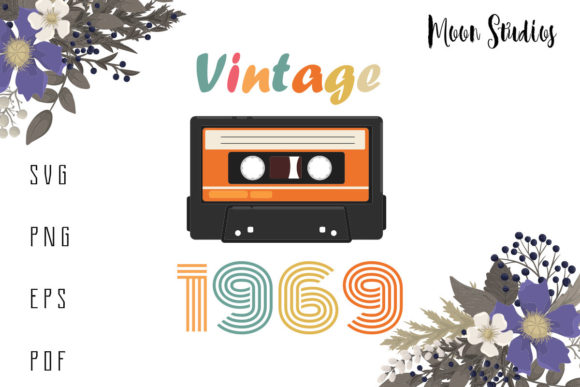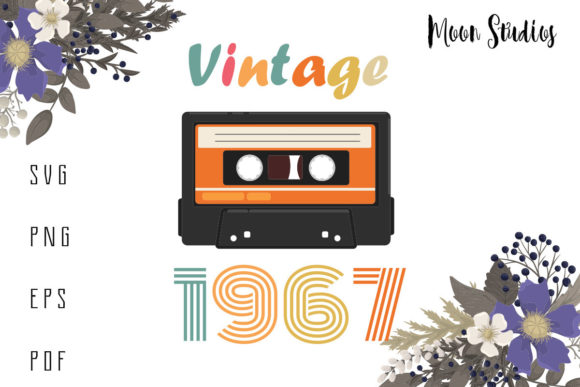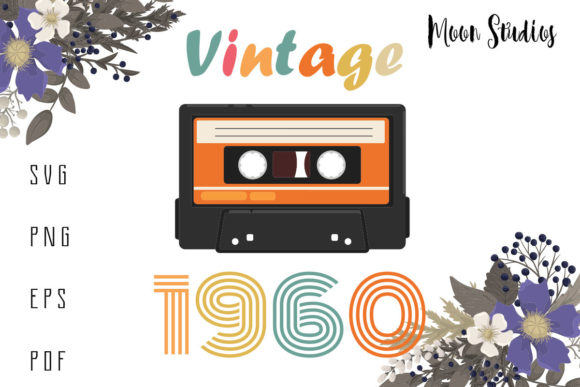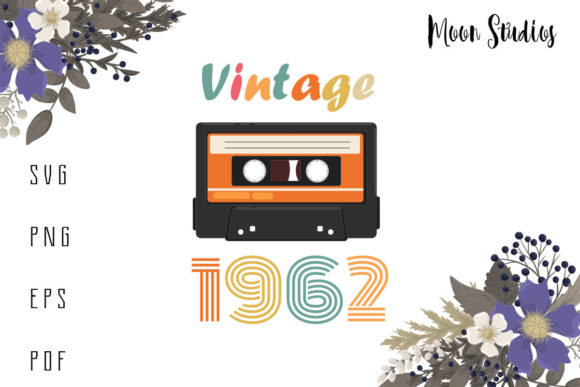
Vintage 1956 Cassette Birthday Man Woman
When I first opened the files for Vintage 1956 Cassette Birthday Man Woman, I didn't just see a collection of keywords; I saw a specific mood. There is a distinct nostalgia attached to the mid-20th century, and this design captures that retro aesthetic perfectly without feeling cluttered or dated in a negative way. As someone who has spent years reviewing embroidery designs for real-world projects, I look past the pretty preview image to ask one critical question: how will this hold up under the needle? Does it translate well from a digital screen to a physical textile? In my experience with machine embroidery design, the answer often lies in the balance between detail and stitch density.
The First Stitch: Visual Personality and Layout
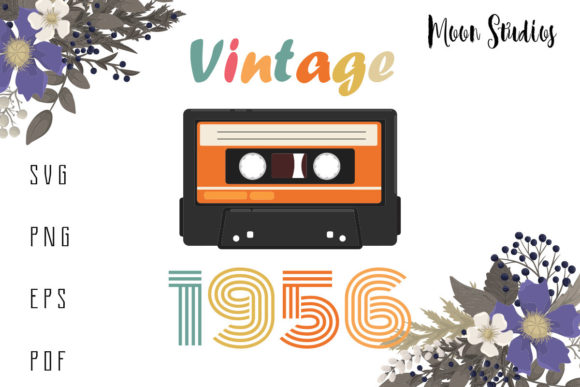
The layout of Vintage 1956 Cassette Birthday Man Woman suggests a playful yet sophisticated approach to commemorative apparel. The cassette tape motif is iconic, evoking an era of mixtapes and analog warmth, which pairs beautifully with the "Born in 1956" concept. Visually, the design feels balanced, avoiding the common pitfall of overcrowding a small area with too much text. It creates a sense of timelessness that fits naturally into a boutique product line or a heartfelt personalized gift.
For a designer, the visual personality is everything. This isn't a generic birthday greeting; it tells a story about the wearer's heritage. The lines appear clean, which is crucial when translating vector graphics into satin stitches. If the file contains fine details on the cassette label or the typography, those are the areas where the design could either shine or fail depending on the fabric choice. The overall composition suggests it belongs on items where the design can breathe, rather than being squashed onto a tiny patch or a narrow hat band.
Real-World Application: A Custom Tote Bag Scenario
Let's imagine a practical scenario. You are preparing for a busy holiday season or launching a new line of handmade products on Etsy. You decide to create a custom embroidered tote bag for a client celebrating their 68th birthday. The goal is to make something that looks professional, durable, and deeply personal. You pull up the Vintage 1956 Cassette Birthday Man Woman design to place on a sturdy canvas tote.
In this setting, the design performs exceptionally well. Canvas provides the necessary stability for a medium-density fill stitch. The retro theme resonates with customers looking for unique, non-mass-produced gifts. When stitched, the contrast between the thread colors and the natural canvas background would highlight the vintage feel. However, you must consider the placement. A large tote allows for the design to be centered or placed off-center for a modern, asymmetrical look. The durability of the stitching is key here; since tote bags are subject to friction and frequent washing, the design needs to have enough coverage to prevent the fabric from showing through, but not so much density that the material becomes stiff and unwieldy.
This same design could easily transition to a sweatshirt embroidery project for a cozy home vibe. Imagine a heavy cotton fleece hoodie with the cassette design stitched over the heart pocket. The texture of the fleece adds depth, making the satin stitch pop. For a baby item, like a onesie or a nursery pillow cover, the design offers a charming touch of history. Parents love items that celebrate their child's birth year, even if they weren't born then, as a nod to family history. But for delicate baby fabrics, the stitch density must be reviewed carefully to ensure comfort against sensitive skin.
Navigating Challenges: Where Caution is Required
While the design has broad appeal, there are specific scenarios where Vintage 1956 Cassette Birthday Man Woman requires extra scrutiny. Embroidery is a technical art form, and what works on a flat surface doesn't always work on a curved one. Attempting to stitch this design onto a structured cap or a curved baseball hat could result in distortion. The tension of the fabric around the curve might stretch the lettering or warp the cassette shape, leading to a finished product that looks amateurish rather than professional.
Textured fabrics also present a challenge. While a textured apron or a denim jacket can add character, loose weaves or thick loops can swallow up fine details. If the design includes tiny text or intricate lines within the cassette reel, these elements might get lost in the fabric texture. Similarly, thin or stretchy fabrics require a robust stabilizer system. Without proper backing, the design could pucker, ruining the crisp lines that give the design its vintage charm. Dark fabrics are another consideration; while high-contrast thread colors usually solve this, the underlying shadow of the dark fabric can sometimes mute the vibrancy of lighter threads, affecting the overall visual appeal.
Dense stitch areas are particularly risky if the design is intended for a small hoop size. If the original file assumes a larger area, scaling it down for a small patch or a wrist cuff can lead to thread breaks and skipped stitches. The review process should always involve checking the stitch count relative to the intended hoop size. If the design is too dense for the fabric weight, it will become rigid and uncomfortable, reducing the value of the final product.
Practical Designer Notes for Success
To ensure your Vintage 1956 Cassette Birthday Man Woman projects succeed, start by testing the design on scrap fabric that matches your final material. This step is non-negotiable for any serious crafter or business owner. You need to verify the thread color contrast before committing to a customer order. Sometimes, a colorway that looks perfect on a monitor appears dull or muddy on actual thread spools due to lighting differences.
Review the stitch density closely. High density creates a luxurious look but can cause puckering on lightweight materials. Confirm your hoop size requirements and ensure your machine settings align with the file specifications. Inspect small details like the text and the edges of the cassette tape; these are the first things customers notice. If the design includes running stitches, check that they are long enough to avoid tangling but short enough to maintain integrity.
Test the design in black and white mockups to evaluate the contrast and readability without the distraction of color. Compare light and dark fabric backgrounds to see how the thread holds up. Always use the proper stabilizer—cut-away for stretchy fabrics and tear-away for stable wovens—to maintain the structure of the embroidery. Finally, confirm whether the design works for both personal and commercial projects. Many designers overlook licensing terms, assuming a purchase allows for unlimited sales. Verify the license agreement before selling finished items or using the design in digital product previews.
Final Thoughts on Value and Trust
The true measure of a good embroidery design is how it elevates the perceived value of the finished product. Vintage 1956 Cassette Birthday Man Woman has the potential to transform a standard garment into a statement piece. When executed correctly, it builds customer trust and reinforces brand consistency for small shop owners. It signals attention to detail and a commitment to quality.
Whether you are creating holiday gifts, wedding favors, or boutique branding assets, this design offers a versatile foundation. It speaks to a demographic that appreciates history and craftsmanship. By approaching the digitization and stitching process with care, you can produce a finished product that feels authentic and timeless. Remember, the difference between a hobbyist mistake and a professional masterpiece often comes down to preparation. Test thoroughly, respect the materials, and let the vintage charm of the design do the rest.